

- Role:
- Lead Developer & System Architect
- Project Type:
- Final Degree Project (TFG) - DAM Program
Overview
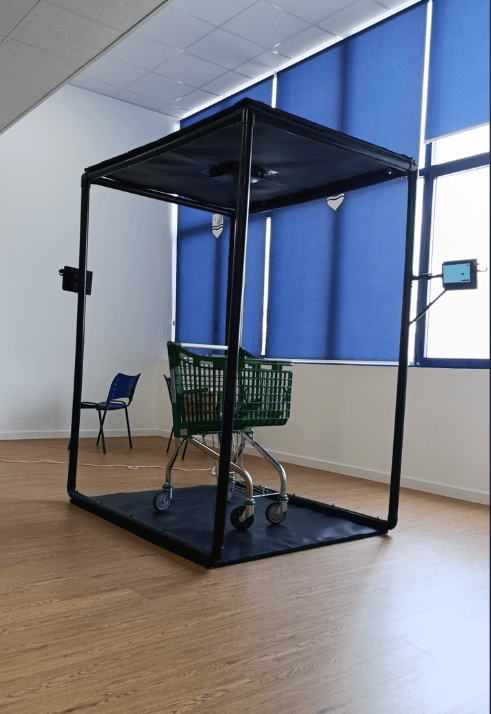
CartX is a revolutionary automated checkout system that replaces traditional self-service checkouts with an intelligent RFID-enabled gateway. As the lead developer and system architect, I designed and implemented a comprehensive solution that allows customers to complete their purchases in under 30 seconds simply by walking through our smart portal with their shopping cart.
This Final Degree Project (TFG) for the Multiplatform Application Development program at MEDAC Davante Elche represents a complete retail automation ecosystem, featuring real-time inventory management, multi-language support, and advanced AI integration for presence detection.
- Node.js
- TypeScript
- React Native
- Electron.js
- MongoDB
- Socket.IO
- TensorFlow
- RFID
System Architecture & Components
CartXCloud (Backend): Developed the core backend infrastructure using Node.js, TypeScript, and MongoDB. Implemented real-time communication with Socket.IO for instant synchronization across all system components. Integrated Fastify for high-performance API handling and incorporated big.js library for precise financial calculations, eliminating rounding errors in transactions.
CartXUI (Gateway Interface): Built the dual-screen portal system using Electron.js and React. Integrated TensorFlow for AI-powered presence detection and developed the RFID communication layer for automatic product identification. The interface supports 6 languages and provides real-time feedback to customers during the checkout process.
CartXStockerApp (Mobile Management): Created a comprehensive React Native mobile application using Expo for inventory management. Features include barcode-to-RFID linking, real-time store metrics, and streamlined restocking workflows for store employees.
Key Technical Innovations
Multi-tenant Architecture: Designed the system to support multiple stores with isolated data and configurations, enabling enterprise-level scalability while maintaining data security and performance.
Real-time Synchronization: Implemented WebSocket-based communication ensuring instant updates across all devices - from the gateway interface to mobile management apps and backend systems.
AI-Enhanced Experience: Integrated TensorFlow-based computer vision for intelligent presence detection, optimizing the user interface based on customer behavior and improving overall system efficiency.
Hardware Integration: Developed custom drivers and communication protocols for RFID readers, ensuring reliable product detection and seamless hardware-software integration.
Development Challenges & Solutions
Precision in Financial Calculations: Implemented big.js library to handle monetary calculations with absolute precision, critical for retail environments where accuracy is paramount.
Cross-platform Compatibility: Leveraged Electron.js for the gateway system to ensure consistent performance across different hardware configurations while maintaining native-like performance.
Real-time Data Consistency: Designed robust data synchronization mechanisms to handle concurrent transactions and ensure inventory accuracy across multiple access points.
Project Status & Academic Context
This project was developed as part of the Final Degree Project (TFG) for the Higher Degree in Multiplatform Application Development (DAM) at MEDAC Davante Elche. While the academic institution prioritized business aspects over software development completion, the technical foundation demonstrates advanced full-stack development capabilities and innovative retail technology solutions.
The project showcases modern development practices including microservices architecture, real-time communication, mobile-first design, and AI integration - representing a comprehensive understanding of contemporary software development challenges in the retail technology sector.
Impact & Future Vision
CartX represents the future of retail automation, eliminating traditional checkout bottlenecks and creating a seamless shopping experience. The system's architecture supports future enhancements including predictive analytics, customer behavior analysis, and integration with emerging payment technologies.
Through innovative use of RFID technology, modern web frameworks, and AI integration, CartX demonstrates how traditional retail processes can be revolutionized through thoughtful software architecture and user-centered design principles.